
Berber Hospitality: Mint Tea, Tagine, and Life in an Atlas Village
By the Atlas Mountains Hike team
You can climb a mountain anywhere. What makes the High Atlas different is the people you meet on the way up. The valleys around Toubkal are home to Amazigh communities — “Berber” is the common name, but Imazighen, “free people,” is what they call themselves — and their hospitality is the quiet heart of every trek we run.
The ritual of mint tea
Arrive in any Atlas village and you’ll be offered tea before anything else. Moroccan mint tea — green tea, fresh spearmint, and plenty of sugar — is poured from a height to build a little foam, and traditionally served in three rounds. There’s an old Amazigh saying that the first glass is gentle as life, the second strong as love, the third bitter as death. Refusing is unusual; sharing it is how a welcome begins.
On our Berber villages treks, tea breaks aren’t a detour from the walk — they are the walk. Some of the best afternoons happen sitting on a carpet in the shade, glass in hand, while the valley goes about its day.
Tagine, bread, and the communal table
Meals on the trail are cooked by a Berber cook who travels with the group, often over a single gas ring or wood fire. Expect slow-cooked tagine — vegetables, sometimes chicken or lamb, with preserved lemon and olives — eaten from a shared dish with fresh bread instead of cutlery. Breakfast is bread, olive oil, honey, and that tea again; lunch might be a bright salad laid out on a rock with the peaks as a backdrop.
It’s simple, generous food, and it tastes extraordinary after a morning’s walking.
Dietary notes: Moroccan mountain food is naturally vegetarian-friendly — vegetable tagines, lentils, salads, and bread are staples, and our cooks happily cater for vegetarians, vegans, and most allergies if you let us know in advance. Tap water isn’t recommended; we provide or point you to bottled or treated water. Alcohol isn’t part of village life, so bring your own discreetly if you’d like a drink (and never offer it to your hosts).
Staying in a family gîte
Multi-day treks overnight in gîtes d’étape — family guesthouses in the villages. You’ll sleep in modest rooms with thick wool blankets, share meals with your hosts, and sometimes be invited to a traditional hammam (steam bath) — a feature of our comfortable 2-Day Berber Villages trek. These stays put your money directly into the community, supporting the families, cooks, and muleteers who make mountain travel possible.
A few notes on etiquette
Travelling respectfully makes the welcome warmer for everyone who follows:
- Dress modestly in villages — shoulders and knees covered.
- Ask before photographing people, especially women; a smile and a gesture is enough.
- Remove your shoes when invited into a home.
- Use your right hand for giving and receiving.
- Learn a word or two — azul (hello) and tanmmirt (thank you) in Tamazight go a long way.
Our guides speak English, French, Spanish, and Arabic, and translate easily between visitors and hosts — so conversation flows even when the languages don’t quite line up.
Tipping: how it works on a trek
Tipping isn’t compulsory, but it’s customary and genuinely appreciated — it’s a meaningful part of the income for the team who carry, cook, and guide. As a rough guide for a multi-day trek, per traveller:
- Guide: around 100–150 MAD per day
- Cook: around 50–80 MAD per day
- Muleteer(s): around 40–60 MAD per day
Pool tips within your group and hand them over together at the end, ideally with a word of thanks. Bring small denominations in cash (dirhams) — there’s nowhere to get change in the mountains. If in doubt, ask your guide privately; they’d rather you asked than worried.
Craft, music, and what to bring home
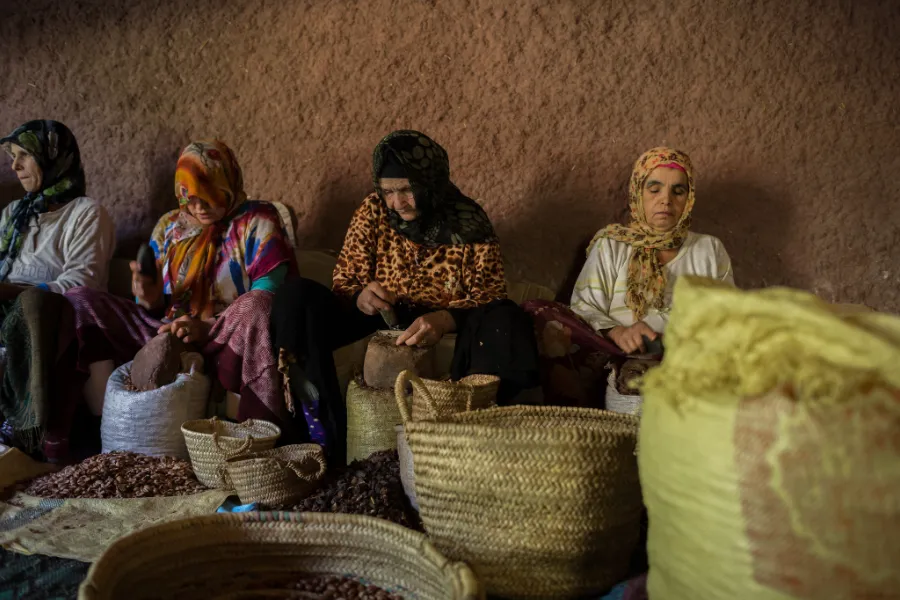
Berber culture is rich in things made by hand. In the villages and cooperatives you’ll find wool rugs and blankets, silver jewellery, carved wooden items, and argan and walnut oils pressed by women’s cooperatives. Buying directly from makers keeps more of the money in the valley — and you’ll know the story behind the piece.
If you’re lucky, an evening might end with ahwach — communal Amazigh music and dance, drums and call-and-response singing that has marked celebrations here for generations. It’s not a performance laid on for tourists; it’s the village enjoying itself, and being welcomed into it is one of the trip’s quiet highlights.
Culture without the summit
You don’t need to climb Toubkal to experience any of this. Some of our travellers come purely for the villages, the food, and the slow rhythm of valley life — and leave just as moved as the summiteers. If that’s you, our village and culture hikes are built around exactly this: no summit required, just the Atlas at its most human.
Curious about life in the mountains? Read more on our blog or plan a trip with Omar and share a glass of tea where it’s poured best.
Ready to trek?
Browse our packages