What to Wear in Morocco
By the Atlas Mountains Hike team
Morocco rewards travellers who pack thoughtfully. Between a Marrakech medina, a 4,000 m summit, and a desert night, you’ll move through wildly different climates and settings in a single trip — and a little cultural awareness goes a long way. Here’s how to dress comfortably and respectfully.
Dress modestly — it’s about respect
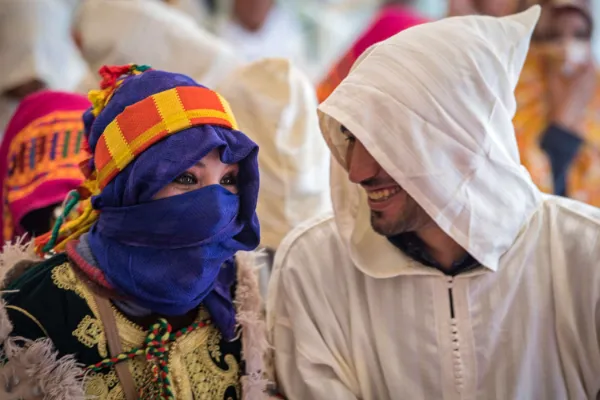
Morocco is a Muslim country, and modest dress is appreciated, especially away from tourist resorts and in villages. A good rule for everyone is shoulders and knees covered. A lightweight scarf is the single most useful item you can pack — it covers your head in a religious site, shields you from sun and sand, and doubles as a layer on cool evenings. This matters most in the mountain villages we walk through, where you’re a guest in people’s home valleys.
Pack for layers, not a single climate
The biggest packing mistake is dressing for one Morocco. Plan for three:
- The city (Marrakech): breathable cotton or linen, comfortable closed shoes for uneven streets, and something a touch smarter for dinner.
- The mountains: proper walking boots, a base layer, fleece, a warm jacket, and a waterproof shell. It can be hot in the valley and below freezing on the summit — read our Toubkal training and kit guide for the full list.
- The desert: loose, skin-covering clothes for sun by day, and a genuinely warm layer for cold nights. See our Sahara tips.
Quick reference: where you are, what to wear
| Setting | Daytime | Evening / extra |
|---|---|---|
| Marrakech / cities | Light cotton or linen, covered shoulders/knees, comfy shoes | A light layer; somewhere smarter for dinner |
| Atlas valleys & villages | Trekking trousers, breathable top, sun hat | Fleece — it cools fast after dark |
| Toubkal summit | Base layer + fleece + insulated jacket + shell | Warm hat & gloves; near-freezing even in summer |
| Sahara | Loose, skin-covering clothes, scarf/chèche | Genuinely warm layer for cold nights |
A note for women travellers
Morocco is welcoming, and you don’t need to cover your hair in everyday settings — but loose clothing that covers shoulders and knees brings comfort and respect, and draws less attention in the souks and villages. A scarf is endlessly useful (sun, dust, mosques, chilly evenings). Leggings under a longer top, midi skirts, and loose trousers all work well. In the mountains, practicality wins — trekking gear is completely normal on the trail.
Fabrics and colours
Choose natural, breathable fabrics — cotton and linen — over synthetics that trap heat. Earthy tones and warm jewel colours suit the landscape, and there’s no need to shy away from colour; Moroccan style is anything but drab. For trekking, quick-drying technical fabrics earn their place.
Footwear matters most
Whatever else you forget, get your shoes right. Cities mean a lot of walking on uneven ground, so closed, comfortable shoes beat flimsy sandals. For any trek, broken-in boots with ankle support are essential — new boots are the fastest route to blisters and a ruined summit day.
A simple packing checklist
- Lightweight, modest layers (shoulders/knees covered)
- A versatile scarf
- Walking boots + camp/town shoes
- Warm jacket and waterproof shell for the mountains
- Hat, sunglasses, high-factor sun cream
- Refillable water bottle and a daypack
Dress for comfort, respect the local culture, and you’ll be free to enjoy everything Morocco offers — from the souks to the summit. Planning a trek? Browse our trips or ask Omar exactly what to bring for your route and season.
Ready to trek?
Browse our packages