Unveiling the Majestic Charm: A Guide to Trekking in Morocco
By the Atlas Mountains Hike team
Few countries pack as much variety into a single trip as Morocco. In one week you can stand on the highest summit in North Africa, walk between Berber villages where life moves with the seasons, and watch the sun set over Saharan dunes. This is a guide to the country’s great trekking regions — and how to choose between them.
The High Atlas: peaks and villages
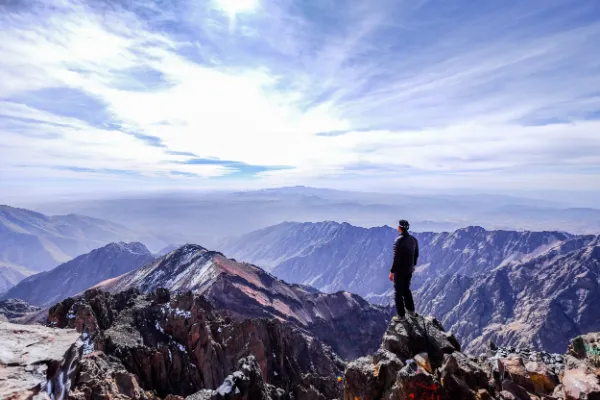
The High Atlas is Morocco’s trekking heartland, and where we spend most of our time. From the trailhead village of Imlil, routes climb to the 4,167 m summit of Toubkal or wander valley to valley past terraced fields, walnut groves, and red-earth villages.
- For the summit: our Toubkal treks, with full detail in Conquer the Heights.
- For culture at a gentler pace: our Berber village treks — no summit required.
- For an overview of the range: see Hiking in the Atlas Mountains.
The Sahara: dunes and stars
South and east, the mountains give way to the Sahara. Trekking here is about wide horizons, camel journeys, nights in Berber camps, and some of the clearest night skies you’ll ever see. It works brilliantly as a contrast to the mountains — many travellers do both. Read our Sahara travel tips or look at the Toubkal and Sahara combination.
Day trips and gentler options
You don’t need a multi-day expedition to feel Morocco’s wild side. From Marrakech you can reach Imlil, the Ouzoud Falls, and Atlas foothills in a single day — perfect for families, first-timers, or acclimatising. See our day trips guide.
How to plan your trip
A little planning goes a long way. The essentials:
- How long do you need? A summit or a village trek works in 2–4 days; add the desert and you’re looking at a week or more. Even a single day from Marrakech gives a real taste of the mountains.
- When to book. Spring (Easter) and high summer fill up first — book a few weeks ahead for those, more for large groups. Spring and autumn weekdays are quietest on the trail.
- Marrakech as your hub. Most trips start and end here. Budget a day either side to enjoy the city and recover.
- Fly into Marrakech (RAK). It’s the gateway for everything in this guide.
- Travel light, bring cash. Mules carry the heavy bags on multi-day treks; you’ll want dirhams in cash for tips, cafés, and crafts (see our Berber hospitality guide for tipping norms).
Responsible trekking
The High Atlas stays beautiful because people look after it. Travel light on the land: carry out your waste, avoid single-use plastic, stick to the trails in Toubkal National Park, and buy from local makers and cooperatives. Choosing a local team means your money supports the guides, cooks, muleteers, and guesthouses whose livelihoods are the mountains.
Practical tips for trekking in Morocco
- Time it right. Spring and autumn are ideal for mountain routes; the desert is best in the cooler months. We break down the best time to climb Toubkal month by month.
- Bring the right kit. Broken-in boots, layers for big temperature swings, sun protection. Our what to wear in Morocco guide covers it.
- Train a little. Most routes need good general fitness rather than athleticism — see how to train for Toubkal.
- Go with a local team. A guide born in these mountains keeps you safe, shares the culture, and ensures your money supports the communities you pass through.
One country, many journeys
Whether you’re drawn to the summit, the villages, the desert, or all three, Morocco rewards the curious walker. Browse all our treks to find your route, or message Omar and we’ll help you shape the trip.
Ready to trek?
Browse our packages